The Making of August

A new hotel designed by Vincent Van Duysen

A former Augustinian cloister in Antwerp becomes a modern-day sanctuary under the guidance of legendary Belgian architect Vincent van Duysen in his first-ever hotel project.

+ Full text and information

A former Augustinian cloister becomes a modern-day sanctuary under the guidance of legendary Belgian architect Vincent van Duysen in his first-ever hotel project.

“…Van Duysen made his name as an architect and designer in the 1990s. Right across his, very broad, range of architectural and design output from private houses, offices and showrooms to furniture, light fittings, cutlery and even his own range of gorgeous pottery storage vessels, a sense of “less is more” and meticulous attention to detailing have become his trademark. Yet he hates to be called a minimalist. His particular aesthetic vision, restrained choices of materials, forms and desaturated colour palettes are very much pared to the essentials, but there is a richness there that is anything but spartan. Perhaps luxurious functionalism best describes his much aped and admired style, which is in high demand from clients around the world. Van Hool and De Scheemaecker were delighted when he accepted the commission.

‘I’ve been approached many times by other people, even big names, to design hotels,’ said Van Duysen, when we met at a site meeting with the client and his team. ‘In a way, I was never ready for it. But with the August, the building, the location, the fact that it’s my home town and with a family that I know, means that the chemistry is just right.’…”

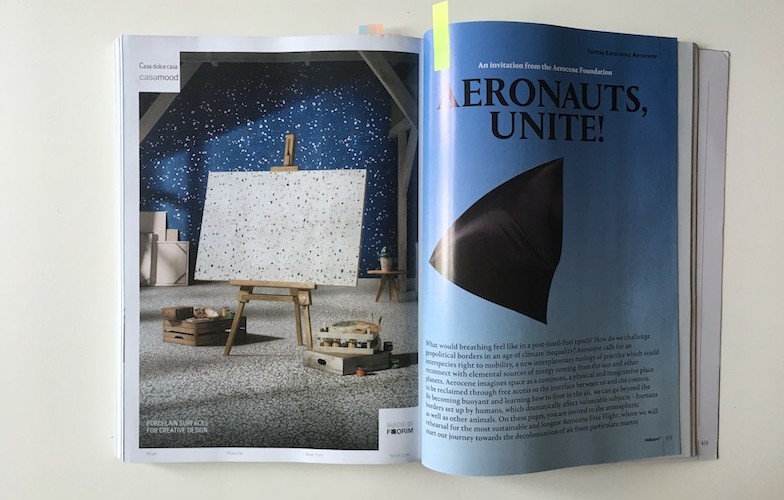
Aeronauts Unite!

Tomás Saraceno and Aerocene

Science, technology, architecture and philosophy all find their way into the art of Tomás Saraceno. Whether in arachnid experiments or aerial cities, he has called for a radical transformation of our relationship with each other and the planet. Ahead of his largest exhibition to date, Sophie Lovell visits Saraceno in his Berlin studio.

+ Full text and information

Science, technology, architecture and philosophy all find their way into the art of Tomás Saraceno. Whether in arachnid experiments or aerial cities, he has called for a radical transformation of our relationship with each other and the planet. Ahead of his largest exhibition to date, we visit Saraceno in Berlin … to witness the launch of an airborne sculpture for the Aerocene project. Sophie Lovell, Wallpaper Germany Editor, tells the story.

“It’s August; Berlin, like most of Europe, is in the grip of a major heatwave. If global warming predictions are correct, this summer is but a teaser for weather extremes to come. It’s 6 a.m. and already too hot. And the Wallpaper* team are en route to join the Aerocene crew at a large lake in Brandenburg near the Polish border for the scheduled launch of their first solar hybrid balloon for the ‘Around the World’ project.

Tomás Saraceno first ‘launched’ his Aerocene project in Paris in December 2015, parallel to the annual United Nations Climate Change Conference COP21. The plan was to create a series of diaphanous sculptural volumes ‘inflated by the air, lifted by the sun and carried by the wind’, designed to circumnavigate the globe by hitching a ride on jet streams ‘without the burning of fossil fuels, without using solar panels, batteries, helium, hydrogen or other rare gases’.

Since then, Aerocene has grown into an independent foundation dedicated to ‘increasing public awareness of global resource circulation’ and fostering ‘a common imaginary towards new ways of co-inhabiting the earth’. It explores the potential for air travel and perhaps even a new way of life in the clouds, completely independent from fossil fuels and national borders, thus standing in collaboration, not competition with other species with which we share the planet.

If your goal is to build castles in the air, then you have to start with your feet on the ground. The Aerocene Foundation and its on-site staff of around ten people share facilities with Studio Tomás Saraceno but are independent from it. The foundation is supported by grants, donations and sponsorships (Audemars Piguet, for example, is supporting an Aerocene symposium series and workshops at the Palais de Tokyo this October, and later in December at Art Basel Miami Beach). This core team is connected to a steadily growing global community of enthusiasts and participants, whose contributions range from technical support and design to flight tracking and conducting their own flights and experiments. The results are then all shared open-source as a form of creative communing. ‘It’s becoming more and more like an NGO’, says Erik Vogler, technical advisor and head of production design.

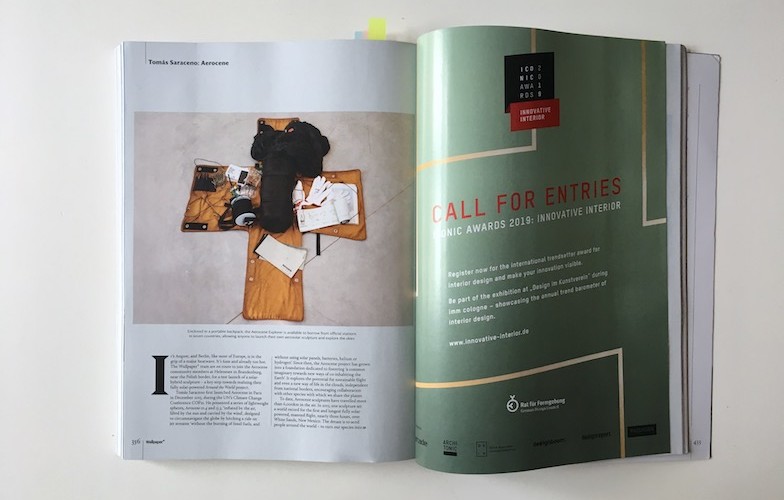
As a way of broadening their research, Aerocene has created around 40 ‘Aerocene Explorer’ backpacks. Anyone can request to borrow one of the backpacks, which contains all the tools you need to conduct your own solar-powered tethered flight. Individuals and groups are encouraged to do whatever they want with the kits: from hacking them to adding software and hardware, or creating dance performances, music or poetry around them. Alternatively, people can also build their own Explorer kits from instructions available on the website. When they are done, they share their results with Aerocene and the community, then hand the backpacks on to whoever wants one next. ‘What’s interesting’, says Aerocene communications manager Camilla Berggren, ‘is that if people damage the balloons, they are encouraged to repair them themselves. As the balloons get more used they gain all these marks from stitches and tape, which build history into the sculptures and make them belong to the community even more’. The aim of all this sharing is to grow the knowledge base of what can be done with solar-powered, free-floating technology.

Back in Brandenburg, the temperature has climbed well into the 30s as we finally locate the Aerocene aeronauts camped lakeside, down a long forest track in a place where Google maps remains obstinately offline. Their tensile tree tents are strung between the pine trees looking, appropriately enough, like spider webs in the morning sun. People are swimming and breakfasting, and some are fiddling with various pieces of equipment and cameras. There also seems to be some kind of discussion going on, since the forest warden just came by and made it clear that they are not supposed to be camping here. Nevertheless, the balloons are set up and a couple of canoes are pulled up on the little beach, ready to tow the new ‘Around the World’ hybrid prototype out into the lake for the launch. Nobody seems in much of a hurry, although it is now after 10am and solar-powered flight is greatly improved if you can catch the maximum hours of daylight before dark. Then, just as it looks like things are going to take off, the police turn up. More discussion ensues, accompanied by taking down of particulars. The 25 or so Aerocene crew and community on site break camp and trek back through the forest to pick up the rest of the vehicles and move to the giant public beach on the other side of the lake. About three hours later we are all sitting on this beach next to a leisure boat hire shop, drinking cold beer and eating lunch. Somebody is playing a guitar. The sand is so hot it burns our feet. It looks for all the world like a scene from Wes Anderson’s The Life Aquatic with Steve Zissou. All that’s missing are the beanie hats.

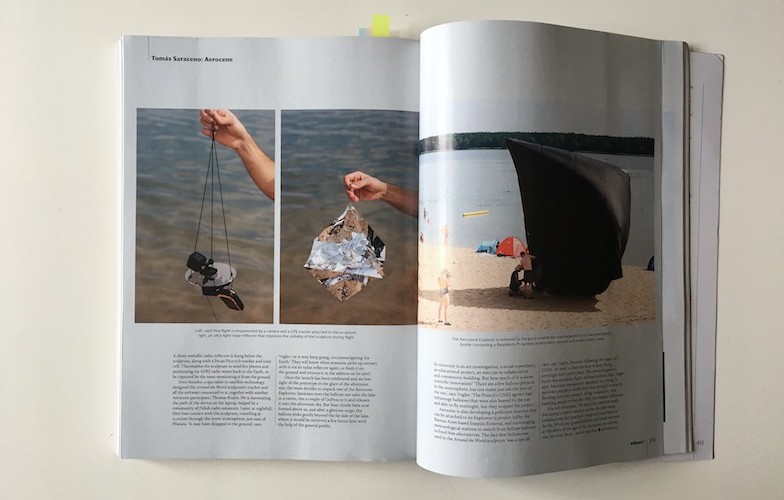
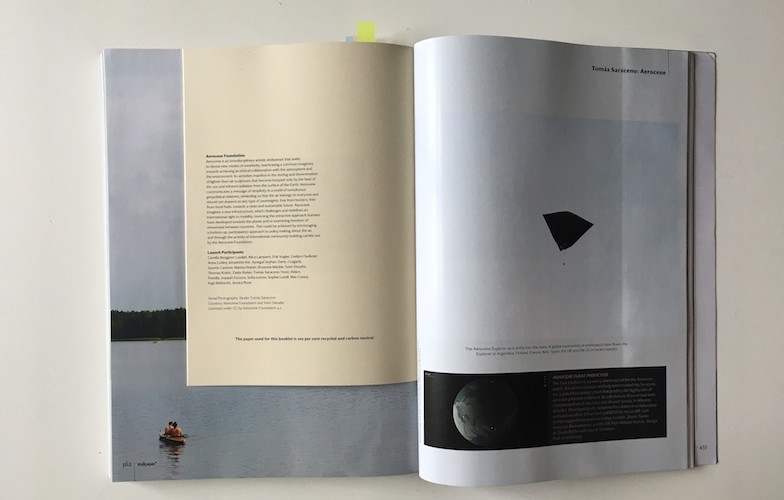
The test launch we are all here to witness and participate in is for ‘a solar hybrid balloon designed to fly night and day around the world’, explains Erik Vogler, ‘carried by a helium carrier to get data about temperature developments and behaviour.’ The sculpture (as he calls it) itself is a cuboid gossamer fabric bag made of Kopa foil that is usually used for transistors, along with three helium-filled SPS-13 balloons. A shiny metallic radar reflector was hung below, along with a Pecan Pico 10.b tracker and solar cell. This enabled the sculpture to send live photos and positioning via APRS radio waves back to the earth to be captured by the team monitoring it from the ground.

The person that seems to be working hardest all day is a community volunteer called Sven Steudte, whose day job is something to do with satellite technology. Together with another volunteer, Thomas Krahn, he designed the tracker attached to the balloons and all the software connected to it. Saraceno is plying him with cold Coca Cola as he sweats over his laptop monitoring the path of the Around the World device, hooking up with a community of Polish radio hams called Radio Sondypolska, who are helping with the tracking. Later at nightfall, they lose contact with the sculpture just east of Warsaw travelling at 12,000 metres through the lower stratosphere. ‘It may have dropped to the ground’, says an apparently unconcerned Vogler two days later, ‘or it may keep going, circumnavigating the earth.’ They will know when someone picks up contact with it via the radar reflector again, or finds it on the ground and returns it to the address written on a label attached.

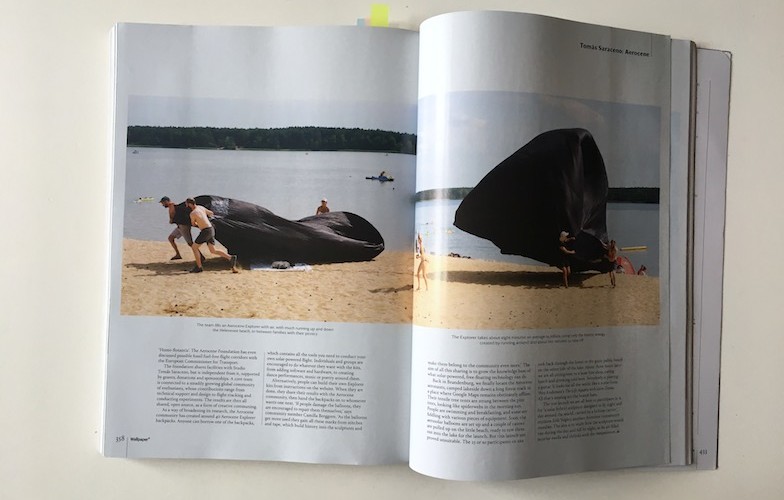
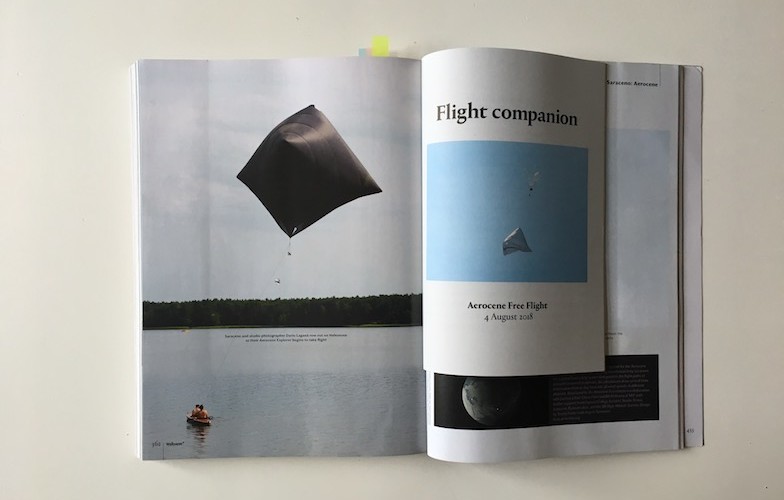
Once the launch has been celebrated and we lose sight of the prototype in the glare of the afternoon sun, the team decides to unpack one of the huge black Explorer balloons. They fill it with air after much comical running up and down the beach between families with their picnics and inflatable toys. Saraceno then tows the giant black quivering pyramid out onto the lake in a canoe, ties a couple of GoPros to it and releases it into the afternoon sky. But heat clouds have now formed above us, and after a brief glorious surge, the balloon sinks gently beyond the far side of the lake.

So Aerocene is a utopian art investigation, a social experiment, an educational project, an exercise in collaboration and community-building. But how much scientific innovation is really involved? Ballooning has been a thing for over 300 years. So surely Google’s Loon project, ESA, NASA or other research institutions, with investment in the millions, are way beyond floating fabric bags into the sky with trackers attached?  ‘There are a few projects doing high-altitude ballooning in the stratosphere, but not many just use the heat of the sun’, says Vogler, ‘The French space agency CNES had their MIR (Montgolfière infrarouge) balloons that were also heated by the sun, able to fly overnight and catch the earth’s radiation, but they stopped the project.’ By not using helium or fossil fuels, he says Aerocene are developing a whole new category of ballooning. They are also trying to connect those advantages to other endeavours, encouraging meteorological stations, for example to switch from helium-filled balloons to fossil-free alternatives (helium is a by-product of fossil fuel extraction). The fact that helium was used in the Around the World solar sculpture ‘was a special case’ says Vogler, ‘because following the legacy of CNES, we need to find out how to keep flying overnight and collect data. The helium carrier allowed the extension of this experiment.’

Also, Vogler says, by developing their own soft and hardware at a tiny scale instead of docking onto the research of big companies like Google, they are showing that ‘You can also do it. We try to motivate people to create workshops and build their own devices. If you are going too fast with technologies that are high profile, the you are cutting out a lot of people from the opportunity to participate in this project.’ Inclusivity, it seems, is the primary driver for the Aerecene project: enabling ordinary people to feel like they can make a difference.

It is late afternoon. We leave the team earnestly discussing a rescue mission across the lake using pedaloes from the boat hire shop, and head back to Berlin. When our grandchildren ask where we were at the dawn of the Age of the Aerocene, we can say that we were there – and it was fun.


Fold, Unfold

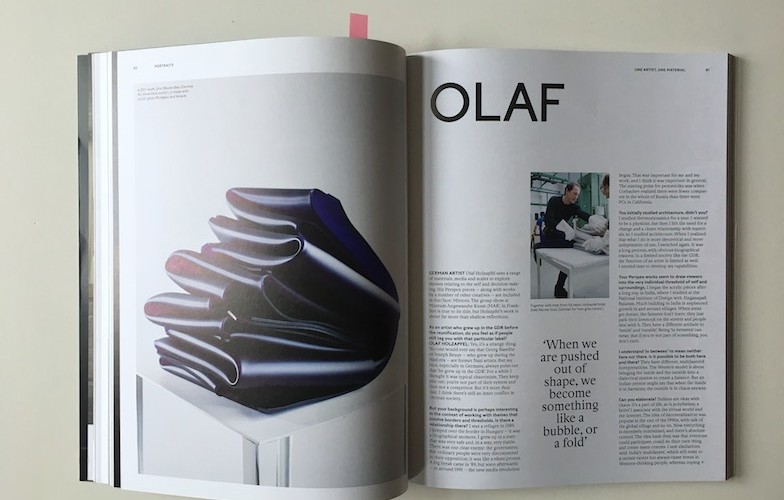
Interview with artist Olaf Holzapfel for Frame magazine

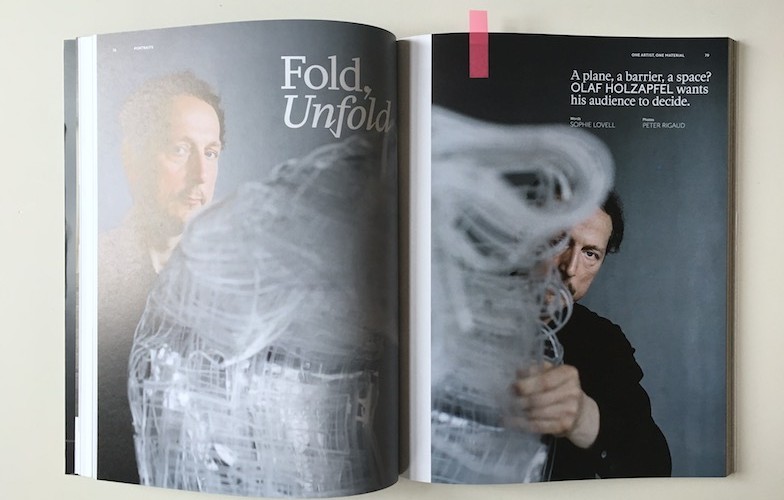
A plane, a barrier, a space? Olaf Holzapfel wants his audience to decide. Sophie Lovell interviewed the German artist who uses a broad range of materials, media and scales to explore his themes relating to self and decision-making.

+ Full text and information

A plane, a barrier, a space? Olaf Holzapfel wants his audience to decide. Sophie Lovell interviewed the German artist who uses a broad range of materials, media and scales to explore his themes relating to self and decision-making. His work, along with that of a number of architects, designers and artists is included in a new group show at the Museum Angewandte Kunst (MAK) in Frankfurt called SUR/FACE: Mirrors, which addresses mirrored surfaces, but Holzapfel’s work is about far more than shallow reflections.

SL: As an artist who grew up in the GDR before the German reunification, do you feel like people still tend to try and tag you with that particular label?

OH: Yes, it is a strange thing, no one would ever say that Georg Baselitz or Joseph Beuys – who grew up during the Nazi era – are former Nazi artists. But in my biographies, especially in Germany, they always say: “he grew up in the GDR”. For a while I thought it was typical chauvinism: they keep you out with it, you’re not part of their system, and then you’re not a competitor either. But it’s not just about this. I think there is still an inner conflict in German society.

SL: But your background is perhaps interesting in the context of you working with themes that involve borders and thresholds. Do you personally think there is a relationship there?

OH: I was a refugee in 1989. I jumped over the border in Hungary. So it is a biographical moment. I grew up in a state that was very safe and, in a way, very stable and there was one clear enemy: the government. But ordinary people were very disconnected in their opposition – it was like a silent opposition. And then in ‘89 there came this big break but immediately afterwards – in around 1991 – the new media revolution began. This was more important for me and my work and I think it was more important in general. The starting point for perestroika was when Gorbachev realised, there were less computers in the whole of Russia than there were PCs in California.

SL: One of the first things that struck me about your work is the range of materials and media that you use, from your painting and digital work to your perspex sculptural objects and wooden framework structures which are very spatial. You initially studied architecture, didn’t you?

OH: I initially studied thermodynamics for a year. I wanted to be a physicist, but then I felt I wanted to change space and have more of a relationship with materials, so I studied architecture. And then I realised that what I do is more theoretical and more independent from use. That’s why I changed again. It was a long process, this was obviously also for biographical reasons: in a limited society like the GDR, the function of an artist was very limited…I needed time to develop what I could do.

SL: How great a role do architecture and design play in your work?

OH: What I learned in architecture is very important for my work. Architecture has a presence, it tells you something whether you like it or not. If you build something and it’s in a public space, it has meaning because we think about it and we see it. This is very important. You don’t need this as an artist, you can say: “I am doing it for myself in the studio, like an experiment”. As an architect or as a designer, you are making things directly for people.

SL: Are you one of those people who draw a strong line between art and architecture, do you see a clear separation between them?

OH: I think there are universal themes in my work. I don’t tend to switch between media for the sake of the media themselves, but rather because the theme has developed further. But I do think that the themes relate to one another and architecture is an important point for me. Adolf Loos’ famous quote: “Only a very small part of architecture belongs to art: the tomb and the monument. Everything else that fulfils a function is to be excluded from the domain of art.” is not something I necessarily agree with.

SL: So is this separation not so important for you?

OH: I think it makes sense that there is a separation. But it is more in terms of the fact that there are different directions of thinking in the Western tradition. There is the renaissance idea that one is entitled to think about several themes simultaneously, that you can be an architect, painter and physicist at the same time. And modernity says – as I was taught – that you have to decide. You have to choose one thing, do it consistently and be the best at it. But this also brings with it the limitation that you don’t really know about the other stuff, that you don’t really know anything and are completely dependent.

SL: Back to the idea of Universal Man? But we have moved away a lot from compartmentalised thinking…

OH: I have never seen things in a circumscribed way. I have always thought that as an artist one is and should be free. For some this means the freedom to always paint the same pictures, to make the same sculptures or to follow set paths. I don’t feel that these limitations apply to me, or the themes that interest me. For example, what I have called “Zaun” [fence] and you call “threshold”. Even when I was a child I knew we did not live in static times. That is why the whole Eastern Bloc fell apart because it wasn’t flexible anymore, it was unable to move. And the error that the West made was to think they were the winners and they had done everything right. But we realise now that is not true, that there are many things we should have developed further since the ‘70s, like experimental architecture, but didn’t, because we thought we were winners. [In the ‘70s] there was a societal interest to build structures like Frei Otto’s Multihalle or the Munich Olympic Stadium. There was a willingness to see it as public development. To go back to your question, architecture has this omnipresence, which is its problem and at the same time the source of its power. It can have an incredible cultural relevance, yet architects don’t seem to be so aware of it.

SL: Architects too often see themselves trapped in fixed structural forms by the market.

OH: In the 1990s there was a lot of building going on in eastern Germany. There was a particular tax break allowing whoever built something to write 40 per cent of it off. It was a great opportunity and all sorts of stuff were built, but I can only really remember one real statement: a concrete building by Gerhard Merz [with EDM Architekten] in Hartha, near Dresden. Working as a student in different architecture offices at the time, you noticed that no one really wanted to. It would have been so easy to develop an avant-garde back then, to develop further, implement the new times and the new media, but far too little happened.

SL: Are there any of your contemporaries in terms of architecture and design, and art that you feel a particular affinity with in terms of method or thinking? Olaf and Carsten Nicolai, Konstantin Grcic, Arno Brandlhuber or Dan Graham come to mind…

OH: In this list I feel Dan Graham is the most important link. Basically what I like about him is his conceptual approach: he analyses society or types of buildings and makes an abstract design, or he has this idea of inside and outside, reflecting your own body in a semi-transparent, multi-layered way. I deliberately placed one of my wooden beam sculptures in the Cologne Sculpture Park next to a glass pavilion by Dan Graham.

SL: In order to start a conversation?

OH: Artists are always having conversations – so do architects – with their works. There are very few artists and architects that I have conversations with. I am more interested in bigger sets of issues. I also try to relate more to the landscape, to particular techniques, or a fundamental problem that has already been solved and I re-interpret or re-animate it.

SL: For example?

OH: There is a room in the Zaun [Fence] exhibition that I curated in Palais  Bellevue in Kassel for the Dokumenta 14, filled with historical, structural models like 18thand 19th century dome and roof sections from churches in Middelburg and Freiberg. What is interesting about them is that the craftsmen were always constrained to make what the material directed them to make. First comes the tree, it’s the same all over the world, and it dictates that you can only build a space or room out of lines. You could just pile the lines on top of each other and make a log cabin, but you still need the line as your starting point. What I find interesting in this respect is that there is a basic technique whereby you can develop a whole space out of a diagram and logic, without ever finishing it. The space [defined by the wooden beam model] is inherently transparent. It can be anything: a church, a roof, a machine. It can go in many different directions. It has the potential to develop within itself.

It’s not about saying that this is how it has to be, rather that a particular technique has potential. Wood frames (in central Europe one tends to think about old buildings, but skyscrapers are truss frameworks too) are alienated from everyday use because no one participates in the development of their own spaces anymore. This is why they are important to me.

SL: let’s go back to this impression that your work is involved with borders with thresholds, on all sorts of different scales. It seems to me, that if you consider the 2D as a plane or barrier and the 3D as space, there seems to be a kind of interaction there, would you agree?

OH: I see it in a much more fluid sense. I want to set it more in motion. 2D and 3D are just conventions. We have forgotten that they are conventions. There is the legendary argument in art, and I am sure in architecture as well, about whether a painting is an object, a relief or a surface. It is all about decisions. An important aspect is to decide for yourself what it is, also for these barriers.

SL: So it comes back to individual perception: whether you see a plane or a space?

OH: It’s more about understanding that these things are unfinished, that I am a part of them and that it is me who can and must decide. This is something that occurs throughout my work, from the wooden frameworks to the folded and inflated perspex pieces.

SL: You spent four years in Patagonia with Sebastian Preece working with local craftsmen techniques and materials, for your project “Housing in Amplitude”. What was the impulse?

OH: One part is the architectural side, but for me, it is also about what we do symbolically; about the self and the ego. I go over there. I have that broad landscape in front of me. How do I create spaces? How do I set my own mark? What is my first story?

SL: How do you make your mark?

OH: Also my borders. For a film I made there – called Having a Gate – we went into the forest and built a huge gate from scratch. The gate is a part of the fence. These gates are massive compared to the thin wire fences, but they are also markers, they say: “this is my border, but also my entrance, an entrance for you”. It is not just about architectural functionality but also a universal metaphorical meaning. With this gate, I am also creating a link with nature.

SL: You work a lot with highly skilled craftspeople don’t you?

OH: I am always interested in the knowledge that others bring with them. For me, handcraft is a vital knowledge that enables us to shape the world. There are these fundamental technologies like weaving or carpentry that will always be there. Our relationship to the material world is a big theme at the moment because today the whole weight of the production of meaning lies in the generation of information and its interpretation. Painters in the past used to say that nature was their great teacher and they saw nature as a role model. Craftspeople are very close to this material world because they understand what they make. This is not old-fashioned, it is a privilege; these people are privileged. This is why I like to work with carpenters because they are craftspeople, architects, designers and engineers in one. When they are good, they have a highly complex knowledge system.

SL: Going back to the personal, your perspex pieces being shown as part of the SUR/FACE Spiegel [Mirror] exhibition, seem to draw the viewer into the very individual threshold of self and surroundings.

OH: I began the acrylic pieces after a long stay in India, where I studied at the National Institute of Design (NID) with Singanapali Balaram. Much building in India is unplanned growth on top of villages. When areas get denser, the farmers don’t leave, they just park their livestock on the streets and people deal with it. They have a different attitude to “inside” and outside”. Also to be in-between can mean that if you are not part of something, then you don’t exist.

SL: I would understand in-between to mean that you are neither here nor there, but you are saying that you are both here and there?

OH: They have different, multi-layered interpretations. The temples have figures that represent the guises of being but underneath that the temples are constructed in a very abstract way – there are abstract models of thinking there. The western model is always about bringing the inside and the outside into a dialectical system, to create a balance. But in India, one can say: when the inside is in harmony, the outside is in chaos anyway.

SL: Do you mean in terms of the individual, not in terms of spaces?

OH: They are okay with the chaos, which is also a part of life … This is also about polytheism, polytheism has a lot to do with the virtual world or the internet. At the end of the ‘90s, there was still the idea of everything being decentralised, the global village and so on. Now everything is extremely centralised, it is exactly the opposite. Absolute control. The idea back then was that everyone can participate, can do something themselves and create many different centres. I thought there were similarities there with these “multilayers”, which still exist to a certain extent but always causes stressful pressure in western-thinking people and that [dealing with the chaos] has more to do with your internal attitude, what you radiate outwards from the inside.

SL: So how does that relate to your perspex sculptures?

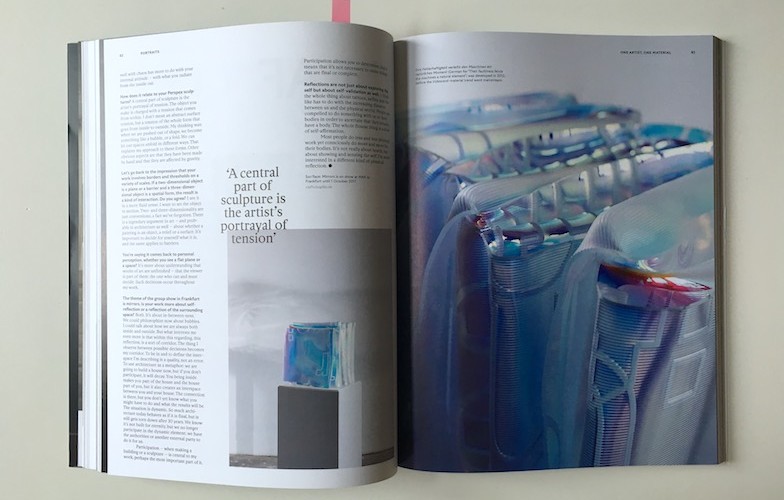
A very central part of sculpture is to say that something has “tension”, that objects have a tension that comes from within. Not just an abstract tension of the outer line but a tension of the whole form that goes from the inside to the outside. So my thinking was: when we are pushed out of shape then we are something like a bubble or a fold. We can, so to say, let our spaces enfold in different ways. That was my approach to these forms. Then there is this element that someone has made them with their hands. You can always see that someone made them and at the same time that they are volumes that are affected by gravity.

SL: They are obviously reflective surfaces too…

OH: Now we are back to Dan Graham: you see yourself, and from another angle, you don’t but can see through instead. You see the interior space but cannot be on the other side at the same time. The viewer is looking out of himself, but also into himself and there is always this dichotomy that you cannot yet be where you are already in your thoughts.

SL: The theme of the group show these works are being shown in Frankfurt is “mirrors”. Are your works then more to do with self/reflection or reflection of the surrounding space?

OH: I think both. It is this in-between-ness – this is quite a central thing, this interspace. We could philosophise now about bubbles, I can talk about how we are always both inside and outside. But what interests me most is that within this regard, this reflection is a sort of corridor. Between different possible decisions, I observe something and that is my corridor. To be in this interspace and to define it is a quality, not an error. If we go back to architecture for a metaphor: We are going to build a house now, but if you don’t participate, it will decay. You being inside creates another space between you and your house. You are then part of the house and the house is part of you because you have to look after it. This connection is about the fact that you don’t yet know what you might have to do and what the results of it will be. This is the dynamic part of being. So much architecture today behaves as if it is final, but it still gets torn down after 30 years. We know that it is not built for eternity. But we no longer participate in the dynamic element – the authorities or someone else outside does it for us.

This kind of participation with a building – or with a sculpture – is central to my work, perhaps the most important part of it: that you can determine. This way of saying that it is not necessary to make things that are final or complete.

SL: Reflections are not just about exploring the self, but about self-validation as well.

OH: I think the whole thing about tattooing and selfies and the like has something to do with the fact that the physical world is going further and further away. People are compelled to do something with or to their body in order to ascertain that they actually have a body. Because the actual body itself is no longer in demand. The whole fitness thing is a kind of self-affirmation.

SL: So it’s all about “making your mark”, not in the landscape but within the hive?

OH: Most people work less and less physically, yet consciously do more and more for their bodies. It is not really about health, but about showing and sensing the self. I am more interested in a different kind of physical reflection.’

The (Not So) Fine Line

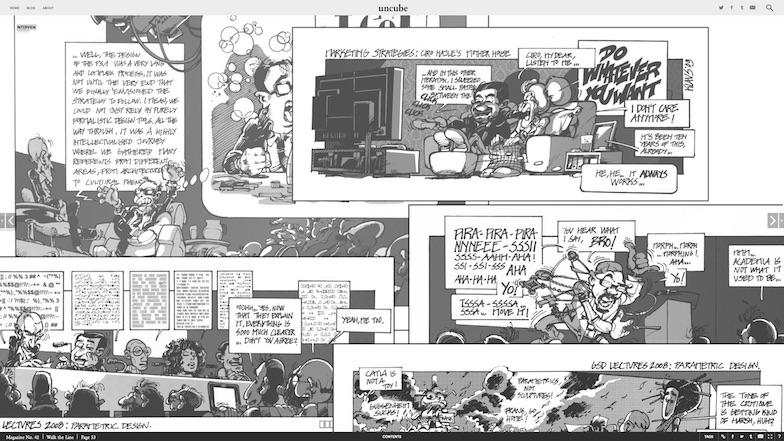
uncube magazine no.42 Walk the Line

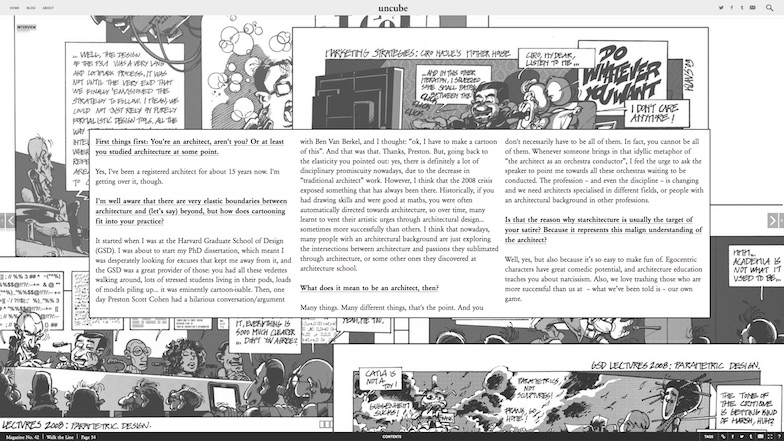
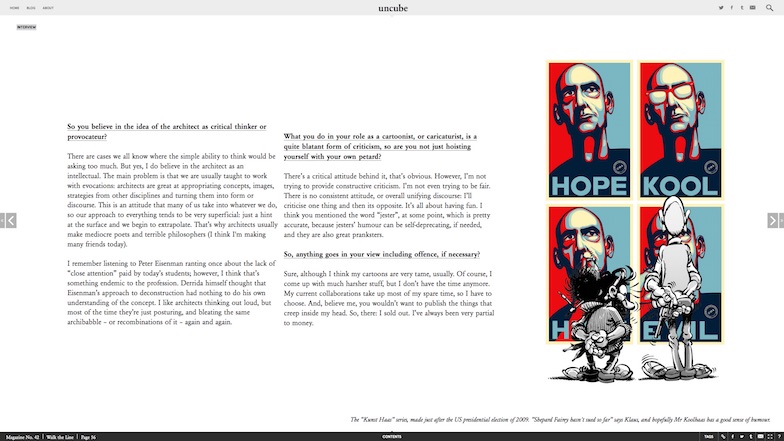
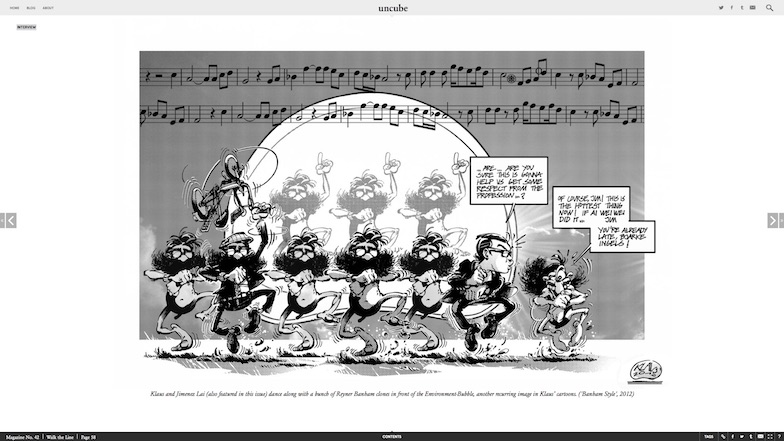
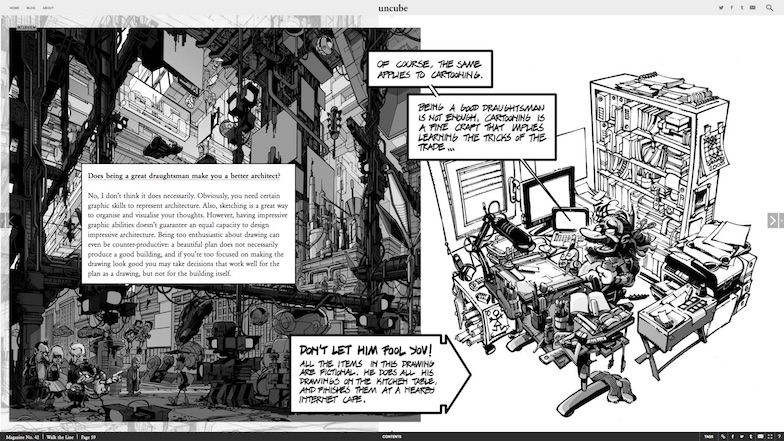
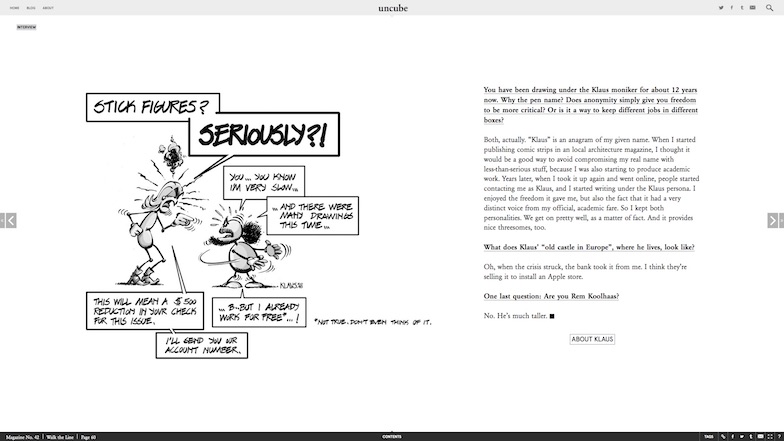
The architecture cartoonist Klaus has had a regular slot with uncube since issue no: 7. His work and approach parallel much of what the magazine stands for in terms of going “beyond” the traditional parameters of the discipline. uncube’s editor-in-chief Sophie Lovell chews the fat with him about elastic boundaries and the hyperbolic distortion machine.

+ Full text and information

A conversation thread about this and that between architecture cartoonist Klaus and uncube editor-in-chief Sophie Lovell. The architecture cartoonist Klaus has had a regular slot with uncube since issue no: 7. His work and approach parallel much of what the magazine stands for in terms of going “beyond” the traditional parameters of the discipline. uncube’s editor-in-chief Sophie Lovell chews the fat with him about elastic boundaries and the hyperbolic distortion machine.

Read the full interview at uncubemagazine.com

Dieter Rams: So wenig Design wie möglich

by Sophie Lovell

“Gleichgültigkeit gegenüber den Menschen und der Wirklichkeit, in der sie leben, ist die einzige wirkliche Todsünde beim Design”.

The Dieter Rams monograph is now available in German as well, published by Edel Books.

+ Full text and information

“Gleichgültigkeit gegenüber den Menschen und der Wirklichkeit, in der sie leben, ist die einzige wirkliche Todsünde beim Design”.

Dieter Rams gehört zu den einflussreichsten Designern des 20. Jahrhunderts. Selbst jene, die seinen Namen nicht kennen, sind garantiert mit einem seiner Produkte vertraut, denn Rams prägte von Mitte der 1950er- bis in die späten 1990er-Jahre hinein als Chefdesigner die Handschrift des Elektrogeräteherstellers Braun. Ob Haartrockner, Radio oder Entsafter, alle von ihm gestalteten Produkte sind durch eine klare Ästhetik, hohe Bedienerfreundlichkeit und Nützlichkeit bestimmt. Denn Dieter Rams ist angesichts der mitunter chaotischen Gegenwart von der Notwendigkeit innovativen, verständigen und langlebigen Designs überzeugt. Seine zukunftsweisenden Ideen versucht er nicht nur mittels einer radikal reduzierten Formgebung zu realisieren, sondern hielt sie auch in zehn Thesen fest, deren letzte und vielleicht wichtigste lautet: “Gutes Design ist so wenig Design wie möglich”.

“So wenig Design wie möglich” ist ein hochwertig ausgestattetes Buch, das die Arbeit von Dieter Rams in all ihren Facetten dokumentiert: Beleuchtet werden neben seiner Tätigkeit für Braun auch seine Produktlinie für den Möbelhersteller Vitsoe (wie sein berühmtes Regalsystem 606), sein architektonisch höchst ambitioniertes Eigenheim sowie sein Einfluss auf die wichtigsten zeitgenössischen Designer. Mit exklusiven Fotografien, vielen Skizzen und einer Chronik seines Lebenswerks bietet dieses Buch einen umfangreichen überblick über das Leben und Werk von Dieter Rams, der zahlreiche Designklassiker schuf und einer jungen Generation von Designern bis heute als Vorbild gilt.

Date: 1st Edition: May 2011, 2nd Edition: Dec 2011, German Edition May 2013
Publisher: Edel Verlag
Author: Sophie Lovell (with a foreward by Jonathan Ive and contributing essay by Klaus Klemp)
Graphic design: Kobi Benezri

BIO 23 Ljubljana

Biennial of Design Award Jury

Sophie Lovell was invited to join the jury of the 23rd Biennial of Design Awards in Slovenia held in Ljubljana on 27th September 2012

+ Full text and information

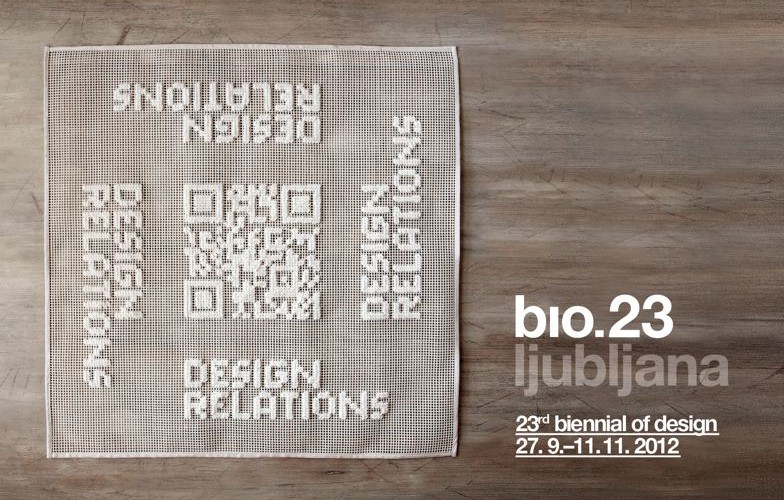
The 23rd Biennial of Design (BIO 23) held by the Ljubljana Museum of Architecture and Design in Slovenia, was curated this year by Margo Konings and Margriet Vollenberg from Organisation in Design. Their chosen theme was: ‘Design Relations’ which addressed how designers and their works are influenced by modern technologies, digitalization and globalization, and how design is evolving.
From the works chosen by the curators for the exhibition at the biennial an international jury was asked to select the best designs from the past two years for the BIO 23 Awards. The members of the jury were Giulio Cappellini, Sven Jonke, Sophie Lovell, Jimmy MacDonald and Vasa J. Perović.

You can see a report on Slovenian national television here featuring interviews with the curators and jurors Sophie Lovell and Jimmy MacDonald – it is in Slovenian but the interviews are in English. For further information on the winners and the jury statement click here.

The show runs until 11th November 2012

Convertible City

Modes of Densification and Dissolving Boundaries

“Convertible City” documents exciting changes in architecture and urban structure in Germany and how existing potential can be sustainably exploited for new urban worlds of living and working.

+ Full text and information

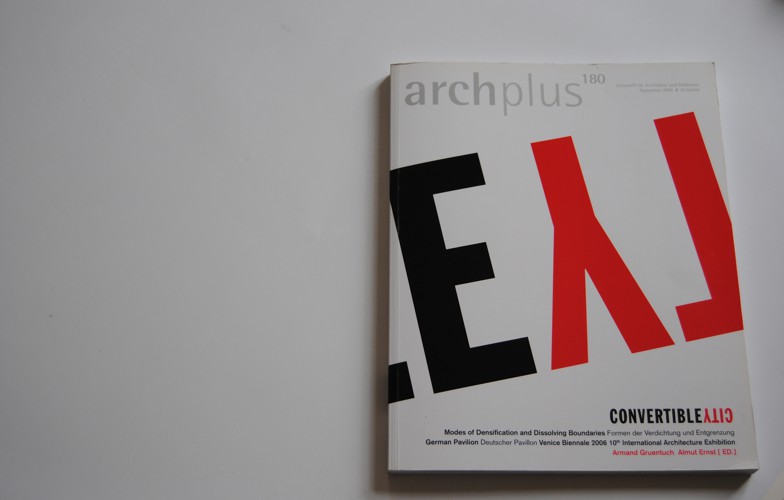
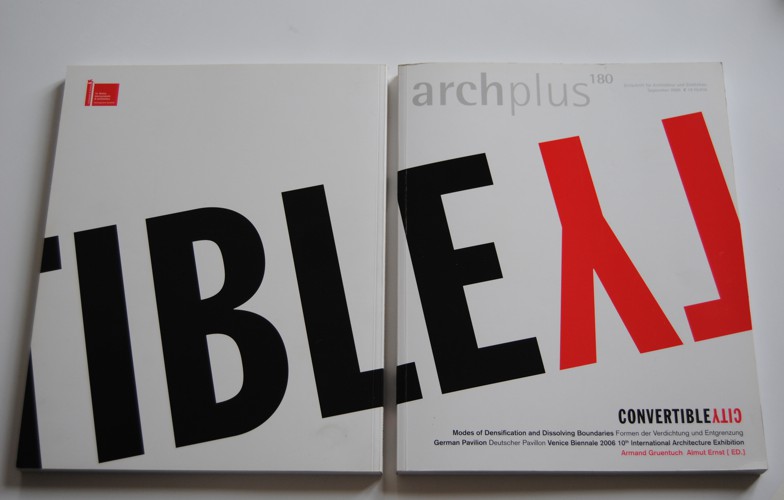
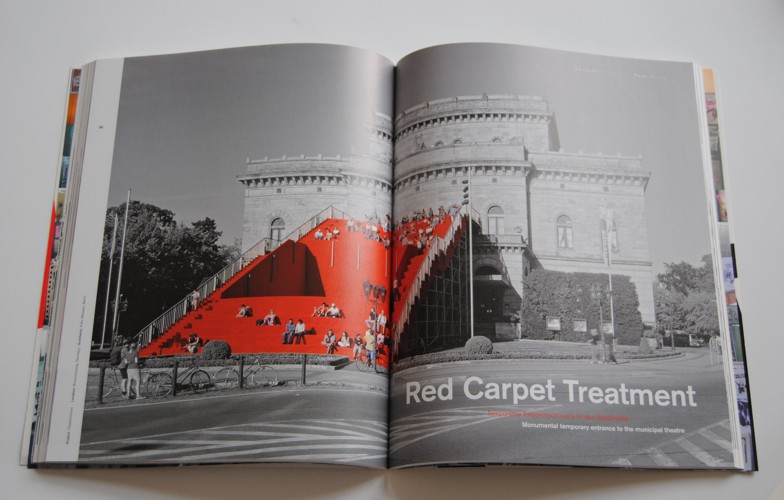
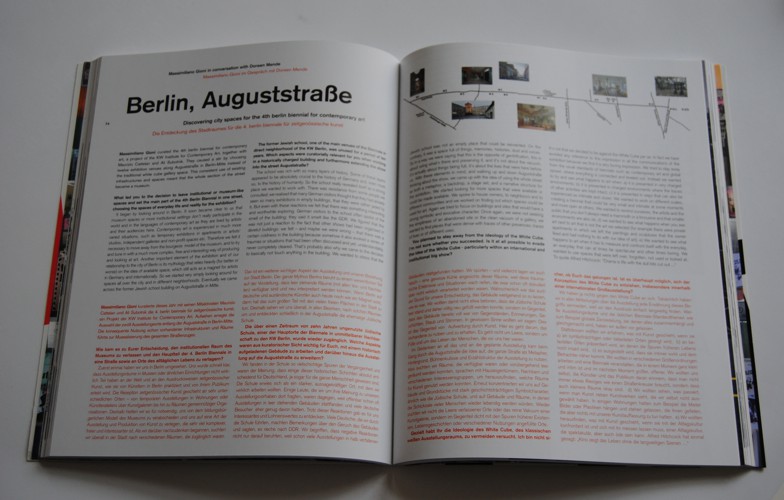
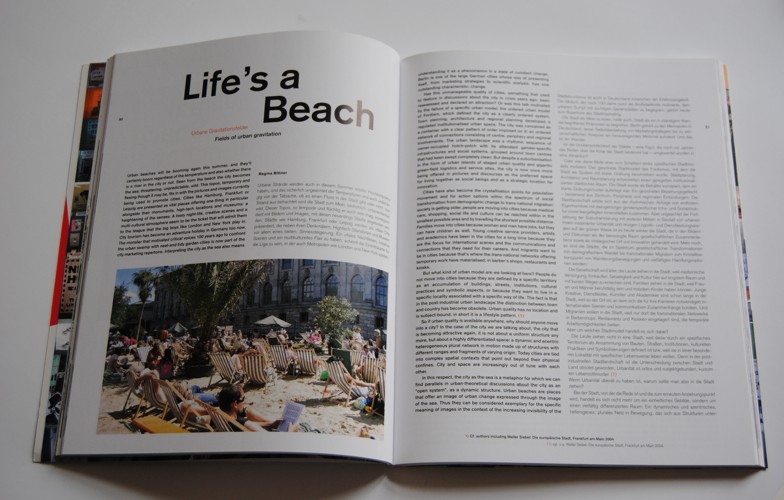
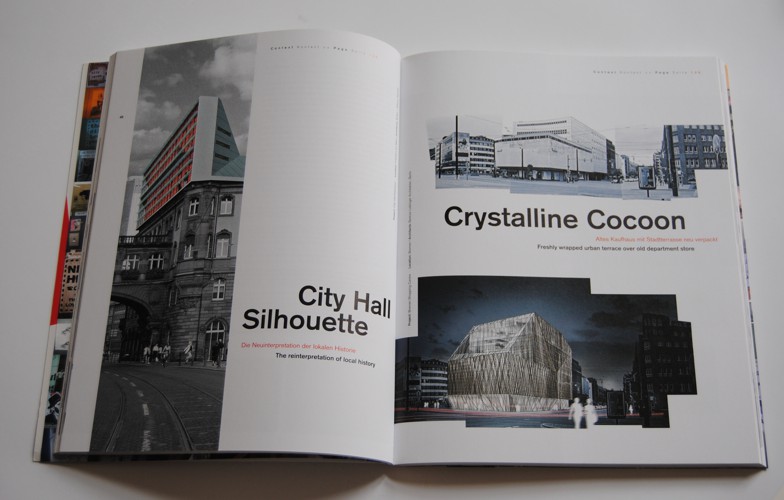
Convertible City: Modes of Densification and Dissolving Boundaries was designed as the catalogue to accompany the German pavilion contribution at the 10th Venice Biennale 2006. The theme of the exhibition, curated by the Berlin-based architects GrüntuchErnst, and its catalogue, was to focus on stimulating projects for transforming existing urban situations in German cities. Convertible City defined itself as: an expression of the continuity and transformative power of urban space, a call for maintaining the diversity of city life, a demand for the sustainable use of core cities, an alternative to urban sprawl encroaching on natural areas, the dissolution of boundaries in the urban habitat, creative appropriation of metropolitan areas, an expression of a positive attitude to urban life and an inspiration and stimulation for new concepts of living.